Solanki Sovereign Strife: The Ultimate Indian Strategy Game
Table of Contents
Game Overview
Solanki Sovereign Striferepresents a groundbreaking achievement in the realm of Indian-developed strategy games. Drawing inspiration from the rich historical tapestry of the Solanki dynasty, this game transports players to an era of royal intrigue, territorial expansion, and strategic warfare.
The game masterfully blends historical authenticity with engaging gameplay mechanics, creating an experience that is both educational and thoroughly entertaining. Players assume the role of a Solanki ruler tasked with expanding their kingdom while managing complex diplomatic relationships and military campaigns.
Key Innovation:Solanki Sovereign Strifeintroduces a unique "Dynasty Legacy" system where player decisions have consequences spanning multiple generations, creating a deeply immersive narrative experience.
What setsSolanki Sovereign Strifeapart from other strategy games is its attention to cultural and historical details. The game developers collaborated with historians to ensure accurate representation of 10th-13th century Indian architecture, warfare tactics, and social structures.
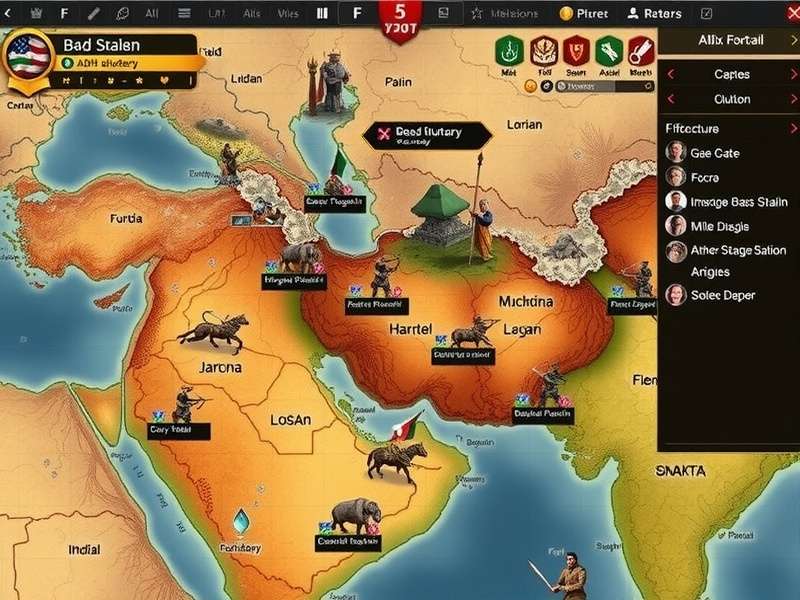
The intricate strategic map of Solanki Sovereign Strife showcases the game's attention to geographical and historical details
Gameplay Mechanics
The core gameplay ofSolanki Sovereign Striferevolves around three fundamental pillars: resource management, military strategy, and diplomatic relations. Each element is intricately connected, requiring players to maintain a delicate balance between expansion and stability.
Resource Management
Players must efficiently manage gold, food, and building materials to sustain their growing kingdom and fund military campaigns.
Military Strategy
The game features diverse military units with unique strengths and weaknesses, requiring strategic deployment for successful campaigns.
Diplomatic Relations
Players engage in complex diplomatic interactions with neighboring kingdoms, forming alliances or declaring wars based on strategic needs.
Cultural Development
Building temples, universities, and markets contributes to cultural influence, which affects loyalty and diplomatic standing.
One of the most praised aspects ofSolanki Sovereign Strifeis its dynamic event system. Random events based on historical occurrences challenge players to adapt their strategies, ensuring that no two playthroughs are identical.
The technology tree in the game reflects actual historical developments of the Solanki period, allowing players to research advancements in architecture, military tactics, and governance that mirror the innovations of the era.
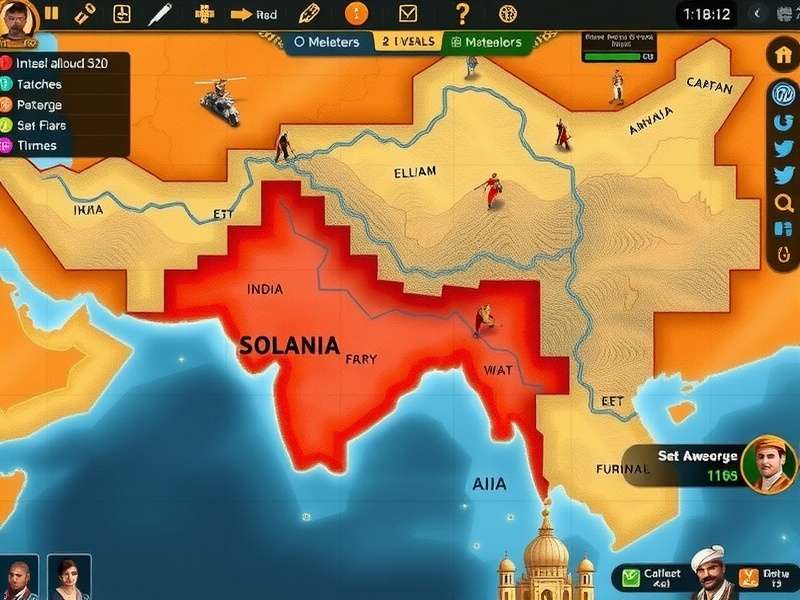
Authentic battle scenes in Solanki Sovereign Strife feature historically accurate weaponry and tactics
Advanced Strategies
MasteringSolanki Sovereign Striferequires more than just basic resource management. Advanced players employ sophisticated strategies that consider long-term consequences and multi-generational planning.
Economic Dominance Strategies
The most successful players inSolanki Sovereign Strifeunderstand that economic strength forms the foundation of military and diplomatic power. Establishing trade routes with neighboring kingdoms early in the game creates sustainable income streams that can fund later expansion.
Specializing in specific resources based on geographical advantages allows players to create economic monopolies. Controlling rare resource nodes becomes increasingly important in the mid to late game as competition for limited resources intensifies.
Pro Tip:The most effective economic strategy inSolanki Sovereign Strifeinvolves balancing immediate military needs with long-term infrastructure investments. Neglecting either aspect leads to vulnerability.
Military Campaign Planning
Successful military campaigns inSolanki Sovereign Striferequire meticulous planning and timing. Attacking during harvest seasons can disrupt enemy food supplies, while winter campaigns present both challenges and opportunities due to reduced mobility.
The composition of military forces should adapt to both the terrain and the specific strengths of opponents. Cavalry excels in open plains, while infantry and archers have advantages in fortified positions and forested areas.
Diplomatic Maneuvering
Diplomacy inSolanki Sovereign Strifeis not merely an alternative to warfare but a complementary strategy. Forming strategic alliances can provide protection during vulnerable expansion phases and create opportunities for coordinated attacks on mutual rivals.
Marriage alliances between royal families create lasting bonds that can span multiple generations, providing stability and mutual defense pacts. However, these relationships also create obligations that can limit strategic flexibility.
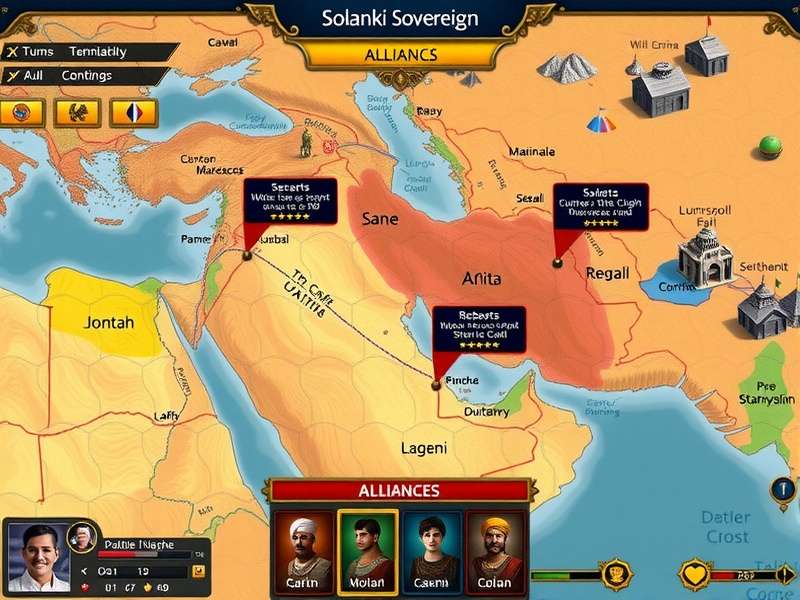
The sophisticated diplomatic system allows for complex international relationships in Solanki Sovereign Strife
Historical Context
Solanki Sovereign Strifedraws direct inspiration from the historical Solanki dynasty (also known as the Chaulukya dynasty), which ruled parts of western and central India between the 10th and 13th centuries. The game accurately reflects the political landscape, architectural achievements, and military conflicts of this significant period in Indian history.
The Solanki period is renowned for remarkable achievements in temple architecture, particularly the intricate marble temples of Gujarat. The game incorporates these architectural marvels as buildable structures that provide cultural and economic benefits to players.
Historical figures from the Solanki dynasty, including Mulraj I, Bhimdev I, and Siddharaj Jaisinh, appear in the game as either playable characters or significant non-player characters. Their documented personalities, strengths, and weaknesses inform their in-game attributes and behaviors.
Historical Accuracy:The developers ofSolanki Sovereign Strifeconsulted with academic historians specializing in medieval Indian history to ensure the game reflects authentic historical circumstances while maintaining engaging gameplay.
The game's timeline begins during the reign of Mulraj I, who established the dynasty's independence from the Rashtrakuta empire. Players experience the challenges he faced in consolidating power and expanding territorial control while managing internal rivalries.
Major historical events, such as the conflict with the Ghaznavid empire and the architectural patronage that produced the Modhera Sun Temple and Rudra Mahalaya, are integrated into the game's narrative and mechanics. These events provide both challenges and opportunities for players to reshape history.
Beyond military and political history,Solanki Sovereign Strifeincorporates social and economic aspects of the period. The caste system, village administration (gram panchayats), trade guilds, and agricultural practices all influence gameplay mechanics and strategic considerations.
The game also acknowledges the religious diversity of the period, with Hinduism, Jainism, and Buddhism all represented as influential forces that players must navigate. Religious patronage affects public order, cultural development, and diplomatic relations with neighboring states of different faiths.
Community & Competitions
TheSolanki Sovereign Strifeplayer community has grown into one of the most active and dedicated strategy gaming communities worldwide. Players share strategies, create mods, organize tournaments, and contribute to the game's ongoing development through feedback and suggestions.
Competitive Scene
Regular tournaments attract thousands of participants competing for prestige and prizes. The annual "Solanki Sovereign Strife Championship" has become a premier esports event in the strategy gaming calendar, with substantial prize pools and extensive media coverage.
Tournament formats vary from quick single-elimination brackets to elaborate league structures that mirror the game's own dynasty systems. The most popular competitive format involves "Anonymized Diplomacy" where players cannot identify their opponents, preventing pre-existing relationships from influencing in-game decisions.
Content Creation
A vibrant ecosystem of content creators produces tutorials, gameplay analysis, historical commentary, and entertainment content related toSolanki Sovereign Strife. Popular streaming platforms feature dedicated channels with millions of combined subscribers.
The game's modding community has created hundreds of modifications that expand gameplay options, introduce historical scenarios from other periods, or completely transform the game mechanics. The developers officially support this creativity through modding tools and a curated mod marketplace.
Community Impact:The success ofSolanki Sovereign Strifehas inspired increased academic and popular interest in the Solanki dynasty and medieval Indian history more broadly, demonstrating the educational potential of well-researched historical games.
Educational Applications
Several educational institutions have incorporatedSolanki Sovereign Strifeinto their history curricula, using the game as an interactive tool to teach students about medieval Indian politics, economics, and warfare. The developers have created special educational editions with additional historical documentation and analysis.
Museum partnerships have resulted in exhibitions that compare the game's representation of historical events with archaeological evidence and primary sources, creating engaging educational experiences that bridge entertainment and scholarship.